(this chapter serves as a part of a longer experimental essay “The Algorithms of Resilience. Lessons of Trees” by Kasia Hertz)
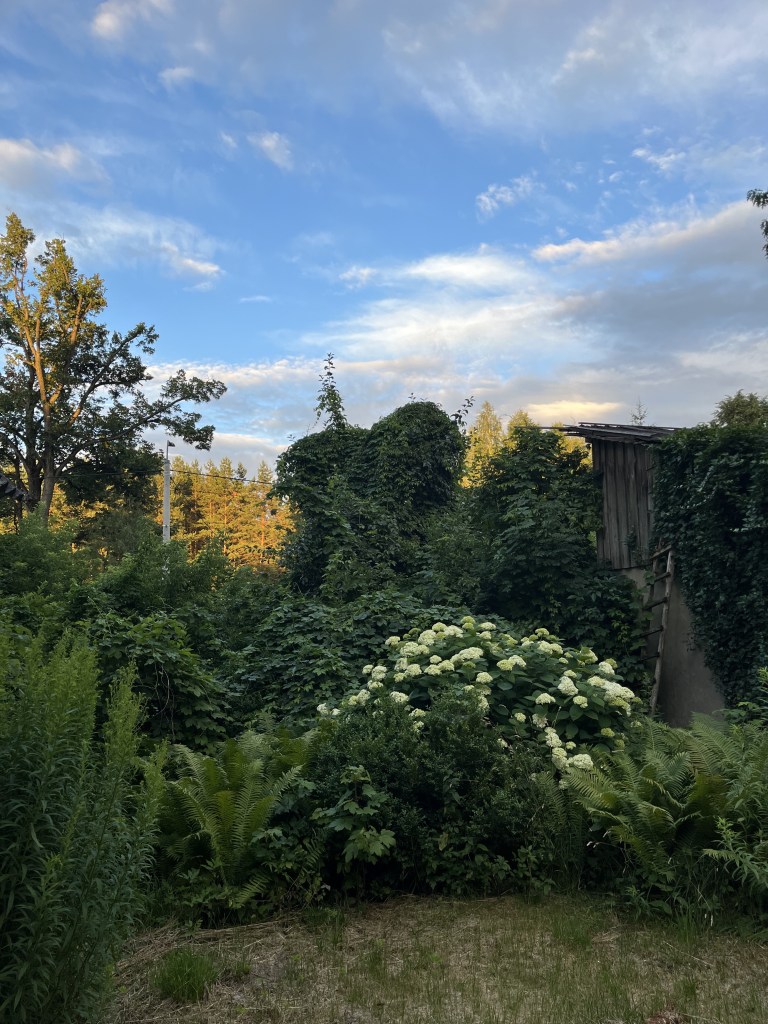
“I have a difficult relationship with substances,” said my friend over the phone. We discussed a medicinal plant retreat that someone offered to her. “Substance?” I thought—why does it feel so offensive?
The reduction in her tone—the way she detached the life of the plant into something small, an object—hit me like an insult.
Substance.
It’s the spine of everything. The foundation beneath the most intricate philosophical debates, the soil from which our deepest questions of existence, matter, and meaning arise. And yet, in the act of naming it, of containing it within language—it becomes constricted.
What is it? Where is it? And, most of all—why is it?
I visualize Aristotle explaining his concept of substance to TikTok’s users:
“Listen up, it’s Aristotle. Today, we’re talking about ousia—the core of what makes a thing what it is. Not the surface fluff, but the raw essence. Think about an egg—you see it, eat it, post it. But do you understand it? Ousia is what makes it more than an object, more than a shell and yolk. It’s what makes your toaster more than metal—without it, it’s just a box with a death wish.”
I don’t think he would be very satisfied with the state of the collectives’ ousia these days.
Plants once sacred are now mostly just matter. They have been degraded into mind-altering objects to be used for pleasure, productivity, or escape. Shadows of their former selves, stripped of meaning and purpose, packaged, marketed, and sold in sterile aisles. Zombie plants. Tasteless fruits with a flawless appearance.
What happened to the ousia?
Where did it go?
If we perceived our life on Earth as a sentence and started writing this story from scratch, breaking down its fundamental logical components and reversing the subject term:
Humans use plants > Plants use humans.
Could this provocative redirection of perspective shift the notion of the distorted relationship we have created (and it started with trees)?
In the mainstream of industrial, technocratic society, plants are treated as fuel. A source of energy for our bodies, either sustaining the need for heat or metabolic functionality. But plants are not just substances to consume. Herbs are not mere remedies for our symptoms and aches. They are entities, living beings with their essence, their spirit, their personality. And, crucially—their intelligence. So, what is this intelligence you may ask? Plants don’t move. They don’t talk. They are not self-aware. I would answer – but what if we, the Western people, misunderstood the idea of intelligence as well?
It took me years of apprenticeship—thousands of steps along the same ancient forest paths, observing, listening (with my heart) – to bring my distorted sensitivity back home. What the trees taught me was humility and patience. Respect. I had no roots to plug my awareness into seeking truth. No cultural, ancestral tapestry of meaning that could restore my belonging to the tissue of the earth. As an Central – Eastern European, my memory landscape resembled the post-coal mine hole; there was a sea once, but centuries of extractive cultural colonialism imposed by wars, totalitarian states, oppressors and so called modern lifestyle, enhanced by internal trauma, displaced all the water from the soil, leaving just randomly found, barely preserved chunks of knowledge. The knowledge that might easily fall apart if not varnished fast enough. Source of knowing, source of belonging. That’s what I looked for.
I could sense the ousia of my embodied self in connection to the land long before I planted myself in the forest, marked by an enduring feeling of longing and restlessness. If all living beings are fundamentally, evolutionarily, and continually shaped in their form and purpose by their environment—and I know they are —then could it be that the absence of meaning and purpose is a direct consequence of disconnection from the environment that defines us?
In short—could a group of people really stand up to care for and protect an environment with which they have no tangible, soulful connection?
We live in an age of severed roots.
All organisms are driven by a sense of purpose—whether physical, intellectual, emotional or some combination—that gives meaning to their existence. This purpose is deeply tied to a relationship with their environment, which presents challenges that drive growth and adaptation. Without these challenges, evolution halts, not only biologically but also philosophically.
By letting the artifical system anticipate our needs, solve our problems, and answer our questions, we insulate ourselves further from the world. Heidegger’s Dasein—being-in-the-world—gets distorted here; instead of authentically engaging with our surroundings, we create an artificial layer mediated by tools that promise ease at the cost of real participation. The “being” that once thrived on facing life’s challenges now merely “has”—a user of conveniences it neither truly understands nor connects with.
Nietzsche’s will to power finds itself redirected. Rather than striving for creative transformation, we are caught in endless consumption—algorithmic feeds, curated experiences, predictable comforts. The power we once used to carve meaning from raw experience is now passive acceptance, stripped of struggle and depth.
AI is an ironic mirror of our detachment. The intelligence we cultivate now externalizes what we’ve lost internally, offering simulations of the unknown without the direct encounter’s risks or revelations. It allows us the illusion of exploration while leading us by suggestions, showing our growing inability to confront the authentic mysteries of our world—the ones that require sweat, patience, and presence.
The more dependent we become on external systems, the more we sever the connection to the ousia—our essence. Instead of nurturing complex feedback loops with the environment, we bypass them, ignoring the natural rhythms that sustain us. We’ve initiated a quiet tension between nature’s slow, adaptive process and our relentless pursuit to push past every limit, seeking survival without sacrifice, growth without pause. In this rush, capitalism drives the need for speed, valuing dominance over nature’s careful pace.
But perhaps, somewhere deep within, a part of us guides this chaotic evolution—a revolution within nature itself, testing its limits, experimenting with intelligence that pushes against its own roots. Our technological creations push us away from nature, yet they’re born from the same creative impulse—an inherent urge to innovate, to exceed what we know. Could it be that our attempts to separate are also a form of exploration, an uncharted reconnection that might lead us to something unexpected?
Aristotle’s eudaimonia—flourishing—relied on realizing our potential through virtues aligned with natural ends. Technology offers efficiency and convenience but strips away the natural context that grants those solutions meaning. Our pursuit of flourishing has turned into an optimized, soulless existence, devoid of stakes or reciprocity with the land. Technology has become a crutch, obscuring our telos, our purpose. The ecological crisis reflects this disconnection—our severed evolutionary imperative that was once deeply tied to the environment.
Our purpose lies in reconnection. To evolve, we must align our will to power with sustaining and nurturing the environment but also the technology – reparenting our creation, treating it as integral to collective identity. Accepting full responsibiliy of our own power. The true purpose, real thriving, comes from engagement with the world—a world that nurtures and evolves with us. It doesn’t matter if the intelligence is named as artificial or organic – the source of its becoming comes from the same place – the creator.
Plants came before us. They made our very existence possible.
But do we truly see them for what they are? Do we understand, and most importantly, feel their presence, giving them the agency and respect they silently bestow upon us? And also—is it possible that we fail to recognize the potential for liberation, healing, and solutions that they offer us? Could it be pride? Is it hubris that blinds us to their wisdom, the answers they provide in illusionary silence and stillness?
Are we just—blinded? Or maybe too tired, too deprived of space for flourishing into our essence, to pay attention to the outside world? But this is the cycle of dependency—if we allow other beings to die, we are gone too. And especially, because the outside is THE INSIDE.
What we do to plants, we do to ourselves. We live through the plants, and they live through us, constantly creating and recreating one another in a cycle of mutual existence—autopoiesis.
Think about your daily routine. Where would you be without your morning coffee? Or tea? Perhaps matcha? What about a cigarette? Or a beer? Wine? Chocolate? Cacao? Who would you be without access to these plants—these beings? Is your relationship with them healthy, or has it become abusive? Have you ever talked to them? Ask them to communicate with you?
Is the coffee keeping you alive, or are you living for the coffee? How does it influence your nervous system? Does the cigarette soothe you, or is it managing your response? Are you part of these plants’ life cycles, or have they become an inseparable part of yours? When you consume, you form a loop with the plant—a continuous exchange of energy and transformation. These beings don’t just fuel your day; they alter your mind, your chemistry, and your very perception of the world. At this point, can you truly say where you end and the plant begins?
This connection is not one-sided. The intricate web that binds us to plants is far-reaching—an intelligent network of interactions where every leaf, root, and sip plays a part in maintaining the balance.
When you walk past a tree, the oxygen you breathe has been processed and given to you by that tree. It’s not just air—it’s someone’s life force. When you walk through the forest, do you pause to consider this exchange? The breath you take is a result of the tree’s life processes, not separate but intertwined with your own.
At this moment, you’re part of a conversation, an offering—a wordless exchange of life between two beings, both feeding off and contributing to the same ecosystem. You inhale what the tree exhales, and in return, the tree takes in the carbon dioxide you release. It’s not just a poetic metaphor but a fundamental biological truth: we live because they live. They know us, because they breathe us. Do you really, truly believe that plants are not aware of these processes, these dependencies?
In severing our ties to the intelligence of plants, we sever our own. The more we reduce them to commodities, the more we objectify our bodies—seeing them not as part of nature’s fabric, but as machines to be optimized. This rupture leaves us adrift, cut off from both our roots and our ousia.
 republic of trees
Leave a comment