forest syntax at work
This is an offering to develop symbolic language between trees and human bodies through careful observation of survival patterns and adaptation traces.
This experimental workshop grows from understanding how both trees and humans carry histories of disturbance in their physical forms. Trees bear witness to environmental trauma – while human bodies hold their own stories of survival. Through careful observation and embodied practice, we explore how these parallel experiences might open new pathways for understanding adaptation and resilience.
The impact of collective and generational trauma
The practice was birthed from recognizing how unprocessed generational trauma shapes our current ecological crisis. In territories marked by historical wounds – from colonization to resource extraction, from border conflicts to environmental degradation – inherited wounds manifest in our continued inability to relate to land as anything other than resource. We are stuck in survival mode, perpectual fight or flight response based on competition for resources/safety – that doesn’t allow us to deeply connect and relate to our surroundings. Our collective dissociation from environmental destruction mirrors personal patterns of trauma response, where overwhelming experiences remain unintegrated and continue to influence present behavior.
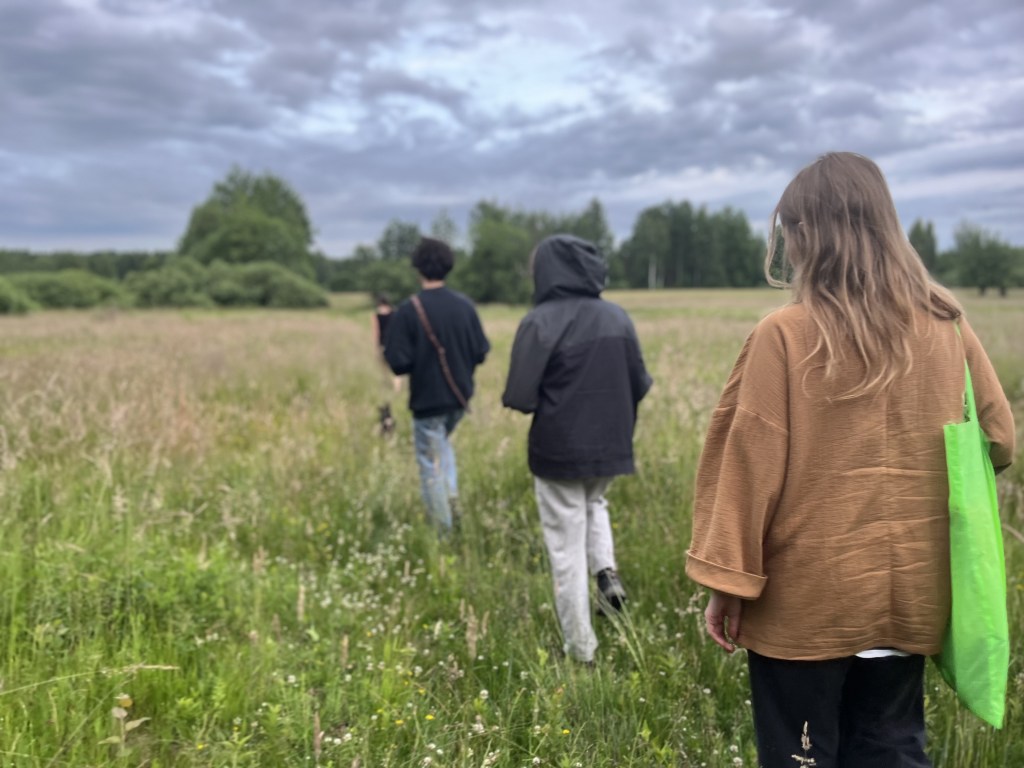
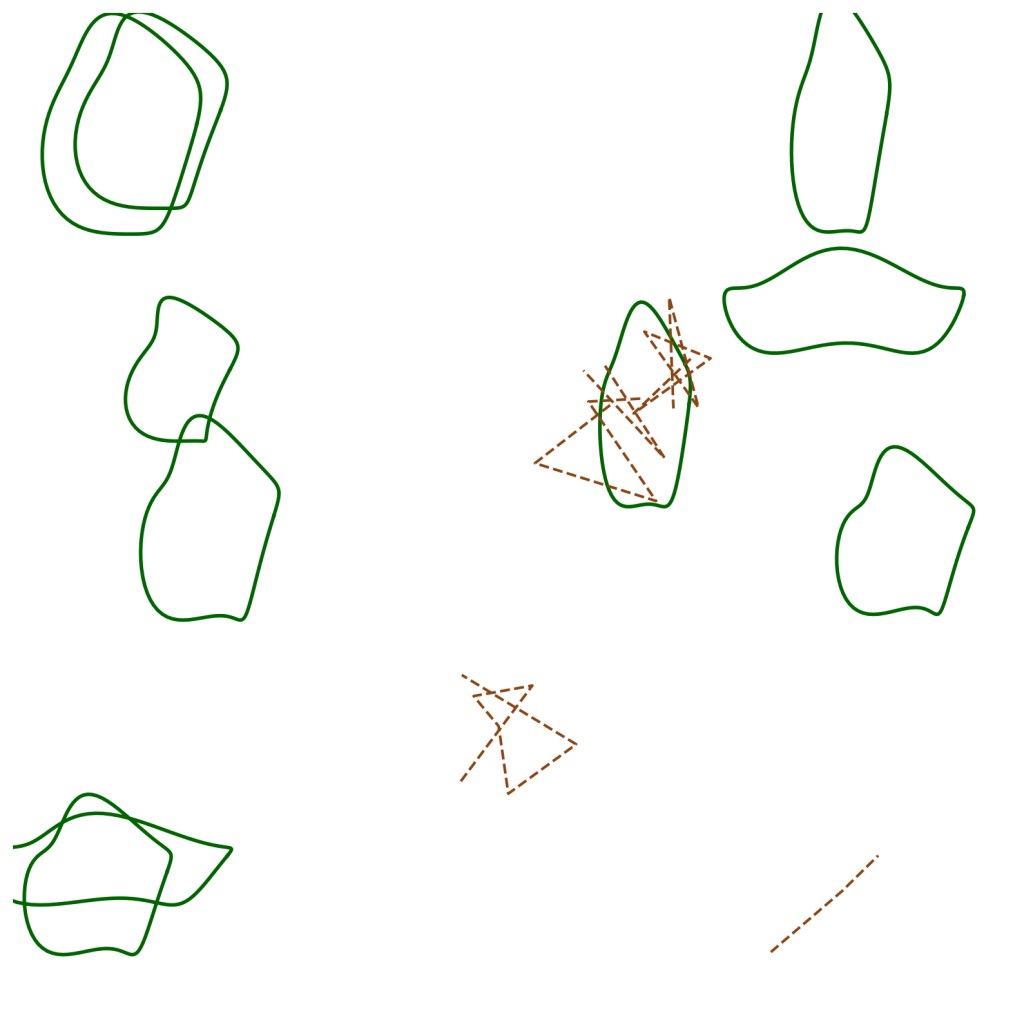
mapping patterns and formings
Sealing not healing
Rather than seeking to “heal” or erase these histories, Forest Syntax works to recognize scars as stories of continuation. Like trees that seal their wounds into distinctive patterns, transforming injury into new forms of growth, we learn to read our own marked bodies as maps of survival. This practice draws from biomimicry not just as biological strategy, but as profound teaching in how to thrive under oppressive circumstances.
By developing new ways of communicating with trees – beings who have witnessed and recorded generations of human and environmental trauma – we begin to address these deep patterns of disconnection and address them gently and directly, not through human . Trees offer wisdom about how to carry forward through sustained disturbance without losing vital connection to place and community. Their ability to transform wounds into new forms of growth, to maintain memory while remaining open to change, suggests possibilities for processing both personal and collective wounding.
Deep observation and listening
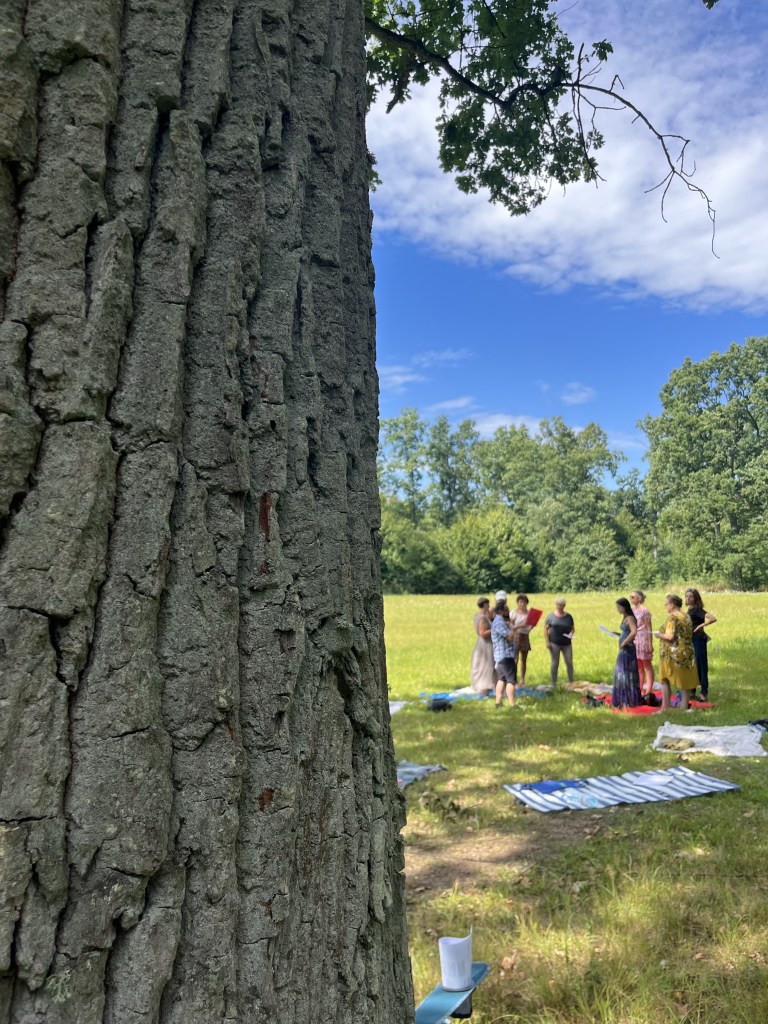
The practice happens through several stages of individual & collective exploration, during which we:
- Notice and document tree patterns through drawing and touch
- Map connections between tree and human body markings
- Develop symbolic translations of these shared patterns
- Create vocal interpretations, share the emotional resonace of symbols through sounds
- Compose and inscribe tree-human poems/songs in the landscape
Each workshop creates space for diverse ways of knowing and understanding. Participants’ varying cultural backgrounds and personal histories contribute to how patterns are read and interpreted, enriching the symbolic language we develop. Local knowledge about trees and their significance fundamentally shapes our understanding, while individual stories of survival weave into a collective narrative of resilience. The practice honors both scientific and traditional ways of knowing while remaining open to new forms of understanding that emerge through direct engagement with trees.
Embodied activism & engagement
This becomes a form of embodied activism, creating spaces where environmental rights and human healing are understood as inherently connected. The way we name and categorize nature through language has historically served power structures that enable exploitation. By developing new ways of communicating with trees – ways that acknowledge their consciousness and agency – we begin to challenge these structures.
Forest Syntax extends beyond the workshop timeframe.
Participants are encouraged to maintain relationships with specific trees, observing how patterns change over time and seasons. These ongoing observations can be shared through an evolving digital archive, creating connections between different workshop groups and locations. The practice becomes a way of building lasting relationships not only with trees but with others engaged in this work of reading and translating tree wisdom.
The goal is not to transcend our wounds but to recognize them as vital stories that connect us to broader networks of resilience. In learning to read tree patterns as expressions of survival rather than damage, we might also learn to recognize our own adaptations as strength rather than deficit.
Duration: 4 – 5 hours
Requirements: Outdoor/indoor space, access to local trees, basic art materials
Group size: 5 – 15 participants
For more details and availability, feel free to reach out here
 republic of trees